Friday, November 7, 2014

Back in Black: RC Kicks off the Year in the Dark

Written By: Katya Schwab '17 and Phuong Tran '15

Published October 2014


The Webb Hall Asylum: With no electricity, Resident Assistants 
were required to evacuate residents the night of Sept. 2, 2014.
Photo courtesy of Katya Schwab '17

On the evening of Sept. 1— the first day of classes for the Fall 2014 semester— students watched as Randolph plunged into a brown out that severely curtailed the flow of electricity to most of the campus.  As temperatures hovered in the 90s and a wave of humidity hit Lynchburg, the sight of dorm-room fans spinning too slowly to offer more than a feeble breeze became commonplace. That was the beginning of three days of power shortages behind the red brick wall.

A Critical Incident Management Team (CIMT) was quickly assembled to address the crisis at hand. Comprised of Dean of Students Matha Thornton, Director of Buildings and Grounds JW Wood, Vice President Chief of Staff Wes Fugate, Director of Residence Life Ben Foster, and Director of Communications Brenda Edson, the group began initiating plans to restore power and ensure student safety.

Randolph community members were alerted by an email from Dean Thornton on the evening of Sept. 1 that the brown out had been caused by blown high voltage fuse, which cut power to a switch that controls 80 percent of campus electricity. An emergency generator was used to supply power to the Student Center so that students who couldn’t endure the heat had a cool place to sleep. Unfortunately, the generator ran out of fuel sooner than expected, on the morning of Sept. 3, leading to the temporary loss of Internet service that left almost everyone offline from general communication. Classes were also cancelled that afternoon.
“This is the first time we had to run the generator this long to keep things up, but in the future, we will make sure that it gets filled at least once a day, and maybe twice a day, depending on usage, to make sure that we don’t run out of fuel in case of emergency like this,” said Chief of Technology Officer Victor Gosnell.

The brown-out continued through Wednesday, as the College awaited the arrival of a replacement fuse that had been shipped from Chicago. It was installed that afternoon at 1:30 p.m.  Despite an e-mail to students stating that the administration was “optimistic the power [would] be restored by the evening,” upon replacing the first fuse, subsequent problems, causing an even larger outage. As a result, students were required to evacuate Moore, Main, West and Webb Halls that evening. Some stayed in local hotels, while others bunked in Bell Hall and the Student Center, where there was still some power. Mattresses, pillows, and blankets were provided in the Student Center, security staff was doubled, and Resident Life staff remained on campus. The CIMT stated in an e-mail the following day that, “our main priority remains to ensure the safety and security of our students.”

Cing Don Nuam (D Dee), who stayed at Randolph during the summer as a member of the painting crew, said there were times when the light in Bell was dim or flickering and there was one day when the power was completely out. Hagay Haut, another paint crew member, said he remembered the incident because it was so hot (the summer heat in Lynchburg can be unbearable at times, especially when your fan is not working) no one could sleep.

However, in an interview with The Sundial, Dean Thornton explained that, as far as she was aware, the summer brown out was city wide rather than an issue with the power system at Randolph.  A story from June 21 on the local ABC affiliate WSET news stated that power in Lynchburg had been affected by lightning strikes from local storms that week.
Aside from failures within electrical system, the emergency lighting system in the halls did not provide ample illumination, which was a primary reason for the mandatory evacuation on the night of Sept. 3. 

On the bright side, the outages did provide a unique opportunity for students, faculty, and staff bonding. Victor Gosnell (for first-years: if you ever see a man with suspenders and cartoon ties, that’s him) walked into the Student Center one morning and was delightfully surprised to see students sleeping on the floor. He walked around, stopped and chatted with several different groups of student as they “clustered around in their little study group.” He asked them how they were doing and if everything was all right.

Thomas Farmer, a janitor, said he and the other janitors had to face the challenge of having to get their jobs done with no electricity to run all the cleaning appliances. However, some students, faculty, and staff would stop and thank him for his effort. “They saw us doing all the cleaning by hand and said they really appreciated it, and that did make me happy,” Farmer said. He also commented on the “Randolph refugee camp” with a smile: “In the morning I saw the students all cuddling up together in the Student Center. It’s unusual to see students sleeping together, both boys and girls. It’s like a big sleep-over!”

The Randolph rumor mill soon began circulating the idea that the administration had known this summer that a large-scale power outage was likely to occur because of an outage that had occurred earlier in the summer.

Dean Thornton also stated that there was no prior indication that the fuse in question was experiencing any problems. Vice President Wes Fugate added, “We just learned that; as far as we know, that particular fuse has never gone bad.”

#RandolphRefugeeCamp: "Randolph refugees" were given
blankets, mattresses, etc. to wait out the brown out. 
Students raced to find the few working electrical outlets to keep 
electronics charged and functioning while waiting for power.
Photo courtesy of Katya Schwab '17
Ngoc (Kelly) Pham, a somewhat reserved Vietnamese student who is also an RA, posted on Facebook that she saw this as a positive experience. "It's good to be back to my own room with power. However, the #RandolphRefuggeeCamp in the past 3 days will be one of the memories that I will never forget after I graduate. Yes, it's hot. Yes, there is no wifi. but I definitely spent more time talking with my friends, enjoyed sleepover party, etc.”

Meanwhile, students who live in the new apartments across Rivermont Ave., which were unaffected by the brown out, sent Facebook messages offering to help out friends behind the red brick wall, in many cases offering couches to sleep on where there was still AC and Internet.

Losing electricity is inconvenient and unwanted; yet, in the dark, we, as a community, did get to see what we don’t usually see when the light is on. Victor Gosnell nicely summed up the experience in just a few sentences: “No one wants a power outage and the problem that comes with it. However, when you have a unified event where everyone needs to work together for a common purpose, I think it helps people bond. Sometimes you have to take the bad situation and look at the good that comes from it, and I think that a lot of students had an opportunity to meet with people, to spend time with people that they would otherwise not spend time with.”

Bräuburgers Aims to Improve an American Staple

Written By: Donald Saltmarsh '16

Courtesy of Bräuburgers
Restaurant Page on Facebook

Published October 2014


Where did the ubiquitous American hamburger come from? Was it Louis’ Lunch in Connecticut that made the first broiled beef patty, or “Hamburger Charlie” Nagreen, who decided to smash meatballs together to create a meal one could eat on the go? Both claim to be the originators of the American burger, and while we can’t tell you who is right, we can certainly tell a good burger when we eat one. Lynchburg isn’t without its fair share of superb burger joint options: from the well-priced Texas Inn to the gourmet burgers of Robin Alexander or Mangia, we have plenty of excellent choices within a short distance. When we drove 20 minutes to Forest to try out Bräuburgers we had high expectations that were left wanting with an average meal.

For those who don’t recognize the name Bräuburgers, you aren’t alone. The restaurant just opened in June in the Forest Square Shopping Center, proclaiming a “better burger” as fast casual food, the same type of restaurant model as Chipotle. One of the trademarks of the fast casual food market is upscale fast food with limited table service, but this restaurant immediately surprised us as it had recently switched to full table service, therefore losing the classification of fast casual.

The Layout of Bräuburgers Restaurant indicates an environment not entirely conducive to a full table service model
Photo courtesy of Bräuburgers Restaurant page on Facebook
As we looked over menus we started off our meal by ordering 12 wings ($9.89) and Black & Tan onion rings ($4.95) dipped in beer batter for appetizers. The service for the appetizers was very slow, and while our waitress was nice she was slow to refill drinks and take orders. When the appetizers arrived, the onion rings had a light batter and were perfectly fried so that there was a good balance between crunch and flavor. The wings were also expertly cooked, but the sauces had us divided. The bourbon molasses sauce had a very intense bourbon flavor that was not offset well by the sweet molasses flavor. While the Thai chili sauce had a bit of a spicy zing, it was rather bland. The wings were also fairly small, so if you go here with the intention of filling up on wings, we suggest buying the large order and hoarding aggressively.

After the appetizers and a nearly forty-minute wait in the half-empty restaurant, our burgers came, once more showing significant deviation from the self-proclaimed fast casual business model. Bräuburgers offers two burger options, either with cheese ($6.59) or without ($5.89) and a variety of free toppings similar to what you would see at a Five Guys. You can make each burger a combo with fries and cole slaw for $8.89 and $8.39 respectively, which we both did. The buns were cooked very well but the patties were slightly overdone. This was redeemed slightly by the toppings that we ordered including mushrooms, onions, lettuce, provolone, and their special Bräuburger sauce—a unique and tangy addition. The burgers came with very crispy and well done fries that reinforced what we had observed with the wings and onion rings: the fried foods were well done but other aspects of the meal were lacking. The food was served in baskets, with Styrofoam cups and plastic silverware, leading us to question the market in which Bräuburgers is attempting to position itself in with its recent switch to a full service restaurant.

For those that are not interested in the burgers, the restaurant also offers various sandwich options including classics like the BLT and Reuben to name a couple, as well as bratwurst and frankfurters. It also features a rotating local beer selection, with 11 local beers listed on tap as well as standard bottle domestics and imports. However, we found that multiple tapped beers listed were no longer in stock, showing a need to update the beer list with more regularity. If you are specifically looking for a broad drink selection you would be better to look to Rivermont Pizza or Robin Alexander.

Bräuburgers is an example of a restaurant that has not managed to find its core market, and with plans to franchise, it needs to find its identity—whether as a gourmet burger joint, sports bar, or fast casual restaurant. While the meal was satisfactory, it was comparable to what one would receive at a Five Guys, albeit with much slower service, less consistency in its food options, and no student discounts. The ultimate question is whether or not it is worth driving far outside the red brick walls instead of staying close by; for now we will be sticking with two Cheesy’s all the way, and the occasional trip to RA for the unorthodox and delicious options they provide.

Natural History Collections Project Gains Exciting New Additions

Written By: Katherine McCallister '15

Published October 2014


The extensive Natural History Collection at Randolph College is constantly growing. The collections began with Fernando Wood Martin after whom the Martin Science building was named, and John Irvin Hamaker in the late 19th century.

In order for the collections to continue to expand, the Natural History Collections Project was established where student volunteers, work study students, faculty, interns, and researchers work together to catalog, preserve, and utilize the vast collection. It contains some species that are endangered or long extinct and a wide variety of specimens ranging from insects, mammals, a vast Herbology collection, and rocks and minerals. It is currently overseen by Emily Smith.


Preserved White Tailed Eagle, Haliaeetus albicilla
Photo courtesy of Katherine McCallister '17
One of the specimens in the collection is a White Tailed Eagle, Haliaeetus albicilla, over 100 years old preserved here at Randolph. The male hummingbird and owls have been preserved in the past few years by faculty and students over the course of several months. There are also many different species of beetles that were once in horrible condition but have been restored by several students.


The Carolina Parakeet Joins the Bird Collection

Caroline Parakeet, Conuropsis carolinensis
Photo courtesy of Michael Sazhin of trainedparrot.com
This past summer, a donation was made, doubling the bird collection from approximately 300 to over 600 specimens. The newest additions once belonged to an artist for National Geographic Magazine.

The College also acquired a rare species of bird, now extinct, called the Carolina Parakeet or Conuropsis carolinensis. This species of bird was native to the Eastern, Midwest, and Plains of the United States. It lived abundantly in old-growth forests along rivers and swamps. However, it became a rare species in the 19th century and was declared extinct by 1939. Randolph is one of the few places with this specific bird in such great condition, even though it was preserved using an older method involving arsenic.

Once all the new additions are cataloged and finalized, the specimen’s information and pictures will be placed on the Natural History Collection site.


Randolph Student Works to Preserve Fawn found on Front Campus
Ballard-Abbot begins preservation of the fawn found on campus, entirely in tact
Photo courtesy of Katherine McCallister '17


The Natural History Collection provides many different opportunities for students to gain experience. Sarah Ballard-Abbott ’16 started off volunteering in specimen preparation in the Natural History Collection, beginning with a wide variety of birds. Ballard-Abbott is currently working on preserving a female fawn that was recently found in front of campus by Smith.

Cause of death was determined by visually analyzing marks on the body, which appeared to be the result being struck, thrown, and skidding across pavement. An opening of the body cavity showed large amounts of internal bleeding. All of this paired with the fawn’s broken neck suggests being hit by a car caused her death.
Between the fawn’s umbilical cord had not fully fallen off yet signifying she was very young, and the fawn’s small size made this an interesting case for Ballard-Abbott. She had finished cleaning a set of deer bones last spring and was planning to articulate the skeleton this semester but it was not a complete set. The fawn, however, is entirely intact. This posed a unique opportunity for Ballard-Abbott to work from the beginning to end of a preservation by deconstructing and articulating this fawn.

Ballard-Abbott began the lengthy process on Friday September 12th by removing the skin from the fatty and muscular tissue. Once the skin is entirely removed, the plan is for it to be processed and preserved in a manner that it may be used at some point for educational purposes. This will take several months to complete.

When it comes to de-fleshing the fawn, a majority of the flesh will be removed by hand and the bones will be placed into a container filled with flesh eating beetles. Over the course of several weeks the beetles will clean the bones of all remaining flesh without causing other damage.
Once all the flesh is removed, the bones will be cleaned and the final process will begin. This includes piecing together any broken bones from the impact of the car and beginning the articulation process, in which the skeleton of the fawn is reconstructed to its original form using wires.

At the end of this project, Randolph College will have its first complete, fully articulated deer skeleton put together by a student.

Let There Be LED's

By: Grace Gardiner ‘15

Published October 2014


Imagine it’s 8 p.m. on a Monday night: you’ve just picked up your mozzsticks from Skeller and are heading to some brightly lit area on campus—Lipscomb Library, the Ethyl Center in Martin, some nook in the Student Center or Main Hall—to get a jump on all the reading you’ve been assigned when the lights overhead begin to flicker. No, it’s not another full-blown power outage—just a result of the countless inefficient and energy-guzzling fluorescent and incandescent lights used across campus. It is this inefficiency and waste that the Sustainability Office hopes to reduce through a campus-wide initiative implementing LED technology.

The mechanism of light-emitting diode (LED) technology can be ascertained on a simplistic level from its name: when electrons move within a diode (a medium through which electrical current moves in one direction with greater ease than in the other), they release energy in the form of photons, the building-block particles of light. The science behind the electroluminescence of LEDs accounts for the efficiency of their use compared to other light technologies, such as incandescent and fluorescent bulbs. Because the electrical current is run through a diode as opposed to a wire filament, as is the case in incandescent bulbs, more of the electrical energy can be converted into light. Of the electrical energy pumped into incandescent bulbs, only about five percent is converted into light energy. Ever burned yourself on a lamp, even after its been turned off? That’s because most energy given off by incandescent bulbs is lost as heat.

When LED and fluorescent technologies are compared, the constant switching on and off of a lamp or lighting fixture containing fluorescent light technology significantly decreases its longevity. LED lights, on the other hand, are more suited to and even benefit from this cycling environment. Furthermore, LED lights illuminate almost instantaneously when you flip on the switch, but fluorescent lights need time to charge before conducting an electrical current efficiently.  Current counts place LED lifespans at a minimum of 25,000 hours; moreover, LEDs dim overtime, giving the heads-up that they need to be changed out, whereas incandescent and fluorescent bulbs quit on the spot.

Ludo Lemaitre, the College’s Sustainability Coordinator offered another pro to the use of LEDs: “Most LED models can be dimmed [and therefore] hooked to a light meter to avoid lighting up a room when there is sufficient sunlight.” He even detailed a way in which LED light could “lower the load on a generator in case of a power outage, which [would allow] more appliances to be hooked to the generator.” 

Despite all the benefits LED technology would generate at Randolph, the cost of replacing every single bulb or light fixture across campus with LEDs is still too high. In addition, LEDs are extremely sensitive to the temperature of their environments and to changes in current flow. Nevertheless, Lemaitre said that efforts are underway to phase in LEDs in “locations on campus that ha[ve] incandescent light bulbs burning for extended periods of time or renovated spaces with new light fixtures, where there would be a greater return on investment.” A couple of places that have already been retrofitted to LEDs are the chandeliers in Main and Smith Halls as well as the lamps in the Maier Museum and Bell parking lots. The College is looking to expand the LED initiative to include Wright Hall while it undergoes renovations in the coming months.

Soccer Season Kicks Off After Productive Recruiting

Written By: Jacob Luzcek '15

Published October 2014


Productive recruiting brought many new faces to the RC Women's Soccer Team
Photo courtesy of RC Athletics
What is the new formula for the Randolph College Women’s Soccer Team? This year is made up seven first-years, twelve sophomores, one junior, and one senior. Let me just repeat that last part: ONE junior and ONE senior. This is partially due to few juniors and seniors on the team to begin with and those who were part of the team left for various reasons. It is safe to say that Head Coach Kevin Porterfield put a great amount of time and work into recruiting for the Women’s team the past two years.
Recruiting is a major part of the job of being a head coach and “probably the most important thing we do,” says Porterfield. Even at the NCAA Division III level, coaches spend an enormous amount of time traveling, making phone calls, sending emails and text messages, and giving tours. They give up holidays, weekends, and family time all so that they can spend the fall completely consumed by the game. Most coach’s recruit all throughout the year, but their sport determines when their busy period and easy period is. For soccer, the busy period comes almost immediately after the season. “Every major holiday means that there’s a tournament,” says Porterfield, who spends a large amount of time away from his wife and two children. Thanksgiving is not on his side as he is usually away from them. “It is a commitment on the family as well as the coach,“ Porterfield says, “My wife basically turns into a single parent for about three to four months in the fall.”

The obvious question is: With everything a coach has to give up, why would he do it? “I think for me, having families on campus is what I enjoy the most,” says Porterfield, “you get to interact not only with the prospect, but you get to know their family.” This also helps develop a more personal connection.  

Having only one junior and one senior on the team “…pushes some of the younger girls on the team to step up and take leadership roles,” says midfielder Hunter Robinson ‘18. There are 19 of these younger girls, seven first-years and twelve sophomores. Robinson also states, “Since we are such a young team, we are excited for the years to come because of how close our team will be.”

This begs the question; will the high number of recruits continue? Forward Brittany Hammons ’15 says, “We have been a continuous growing team and we were really fortunate to receive the numbers we did last year and this year.  I think in the future the team will continue to not actually grow with numbers but grow stronger in experience and knowledge as well."

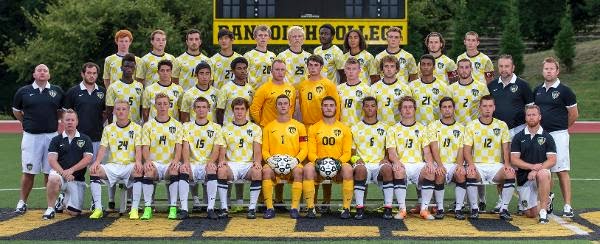
The Men’s Soccer team has had a full or nearly full roster for the past five years. Throughout these recent years, the team change in team members lost and gained has greatly fluctuated. In 2010 there were 19 first years on the team; the highest number of first years recruited. In 2014, the team lost 14 players who graduated; the highest number of graduates the team has had at one time.


After losing fourteen players this spring with graduation, RC men's soccer needed flexible recruiting strategies.
Photo courtesy of RC Athletics


This flux in the size of each class presents Men’s Soccer Head Coach Bryan Waggoner with a different outlook on recruiting; the more players he needs to complete his roster, the more the style of recruiting changes. “It depends on the year,” says Waggoner. “Usually in the smaller classes we are looking for some specific things to help improve our team,” says Waggoner. These specific traits could be speed, size, or technical ability. “We really look at what we feel the [opposing ODAC] teams weaknesses are and bolster those areas with smaller recruiting classes.” For Waggoner the larger recruiting classes don’t require the search for such specificities. “For the larger classes we are looking to recruit pretty much a little bit of everything,” says Waggoner, “We are looking for players that meet our standard academically and athletically.”

Through all of his various recruiting tactics Waggoner likes to keep a sense of balance, explaining that, “Balance, like in soccer, is very important in recruiting.”

Breaking Good: Alternative Fall Break

By: Lana Mehiar '15

Published: October 2014

This fall break is like no other!      
    
Fall break! It is that time of the year when students a time for relaxation, sleeping, and for a few a time to join a fun program and gain a new experience. You can now participate in an exciting experience: the alternative fall break program.    

The alternative fall break program is a ten day program for Randolph College students, who are interested in embarking on a new experience and giving back to the community. The program is organized by Director of Leadership and Engagement Amanda Denny and focuses on various aspects of volunteer work including but not limited to poverty, education reform, refugee resettlement, and the environment. 

What makes this program special is that students get the chance to help others in need, and also carry the learning outcomes of this experience back with them to their own communities. Denny explains, “the intensity of the experience usually increases the likelihood that students will apply the learning outcomes from the trip to their own campus communities once they return. Some of the positive outcomes of this program for students include friendship and bonding with classmates, giving back to the community, and developing leaderships skills and exploring new interests.”

They also get the chance to grow as individuals, develop their skills, and connect with others. One of the student leaders of the program, Evan Smith ‘15, participated in the alternative fall break program in 2013. Smith went to Camp Friendship in Palmyra, Virginia where he, with the rest of his classmates, participated in a camp-wide clean up as well as the creation of banners for the camp. Some of the activities included removing old fire wood from fire pits, weeding the volleyball court, cleaning cabins, and preparing and serving breakfast to campers. His favorite part of this experience was being with all the people on this trip and bonding with the community. He also recommends incoming students to try this exciting experience, he says “it is a great way to meet people, go somewhere new and help others.”

Another student who participated in the alternative break program is Abigail Smith ‘15.  This trip took place in the spring, in Wilmington, North Carolina and included various service projects such as volunteering at the NC Aquarium. Abigail participated with her classmates in a beach sweep, removing marine debris from the coast and recycling some debris. She describes the trip as a rewarding experience that enabled her and her fellow classmates to go beyond themselves for others, she comments "All students expressed some sort of gratitude about their standard of living, and some became more aware of social issues that occur in the U.S.”

If you are interested in applying for the upcoming alternative fall break program, you should apply for it quickly, because spots fill up fast! There are no specific requirements for participating in the program, but students who sign up first have the priority considering the limited space. Priority is also for new students, but returning students are welcome to apply.


Previous programs were offered for free so students were only responsible for personal expenses. As the supervisor of the program, Denny strongly advises students to participate, she says, “Give a trip a try!  You never know how it could change your life or your perspective of how you view the world.”

Friday, September 26, 2014

Lynchburg Community Gets Down at Get Downtown


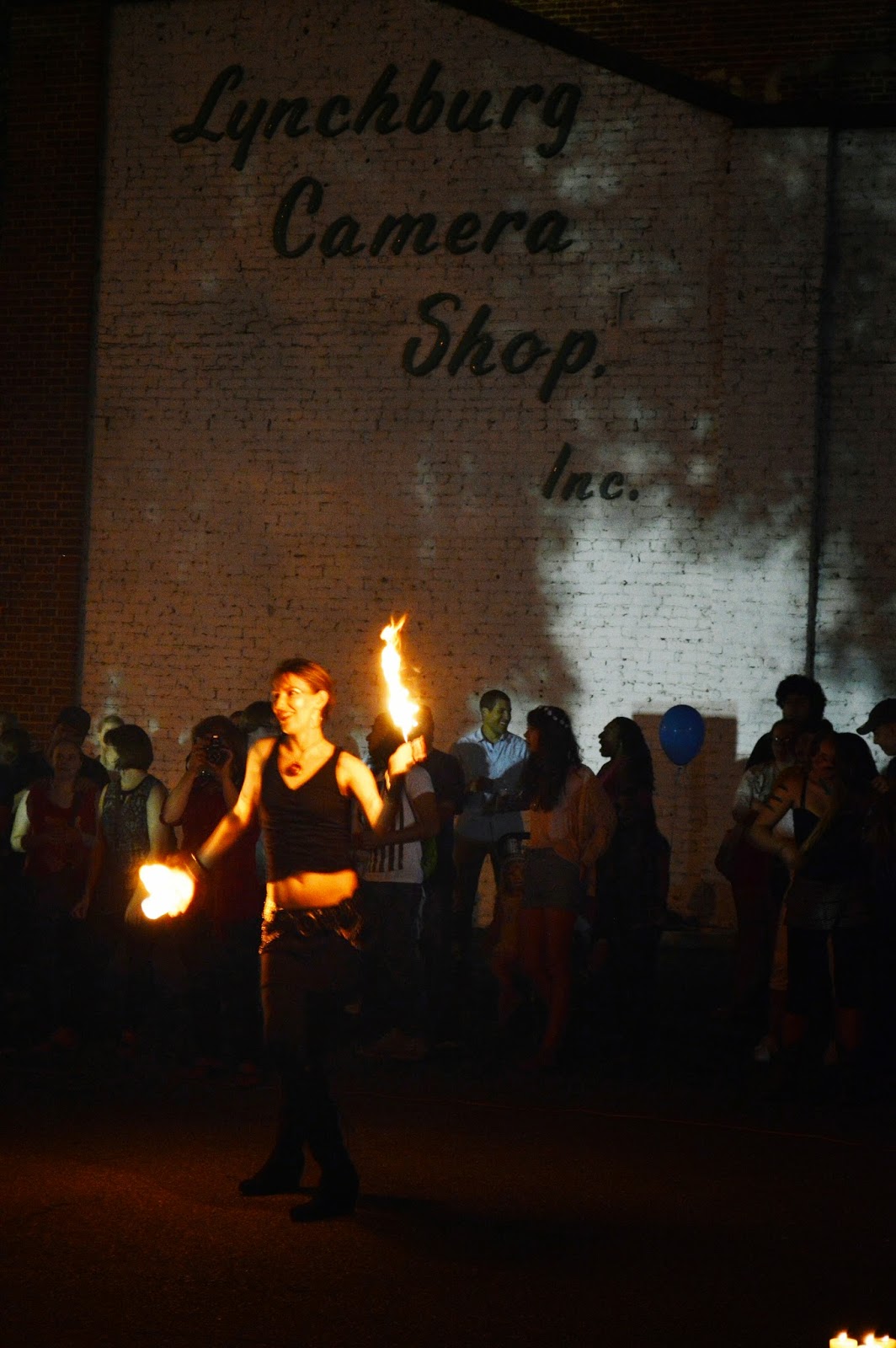
Leanne Zalewski, a professor here at Randolph, provided fiery entertainment as the evening came to a close.
Leanne Zalewski, one of Randolph college's art professors introduced Lynchburg's community to a fiery form of art.
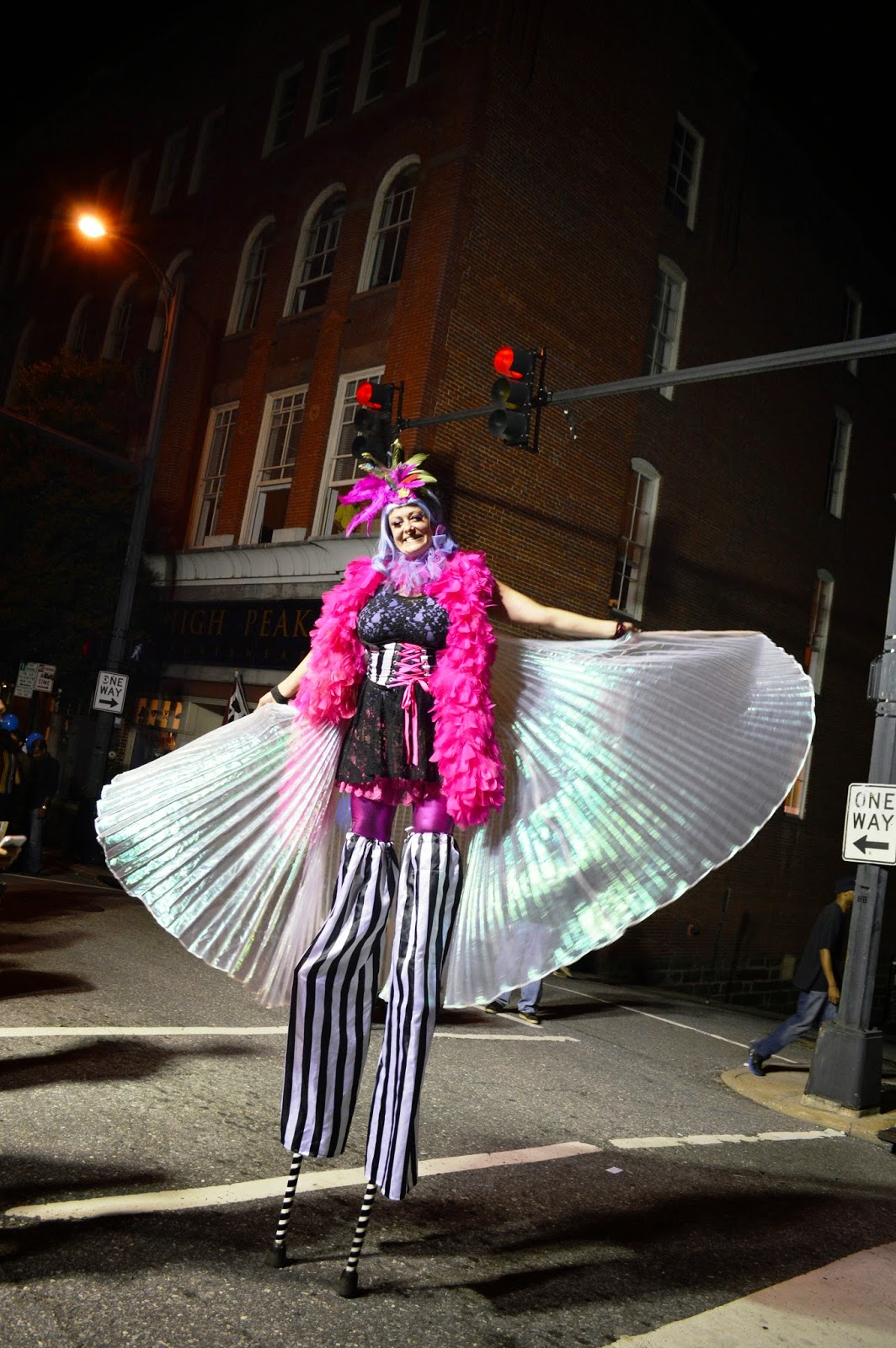
 Many street vendors provided colorful fun to the children of Lynchburg.

Many of Lynchburg's community dressed up to celebrate Get Downtown! 2014 taking it to a new level of high on life. 
The iconic Bug Mobile of Randolph cruised into Get Downtown! 
Wanda Wildcat was spotted gettin' down at Get Downtown!


All Photos Credit of Katherine McCallister.